


Living with Chronic Illness
Living with chronic illness affects so many parts of everyday life. For me, getting a diagnosis was only the beginning of learning how to manage it.
Here I share my experiences of coming to terms with a diagnosis, explaining symptoms and needs, pacing, preparing for a flare and navigating work. Use the buttons below to go straight to a particular section.
A Guide for Diagnosis with Chronic Illness

On this page is a guide of the things that I wish I knew when I was diagnosed with chronic illness and have slowly learned along the way. Diagnosis is a difficult time, and there's no sugar coating it. There may be many stages of emotions that you go through and it's okay to feel how you feel. If you need someone to talk to, please reach out.
You can use this to refer to upon diagnosis or share with others who have been recently diagnosed.
Stages of Grief
1. There are stages of grief that you may experience on your path to 'acceptance' of your chronic illness;
-
they're not necessarily linear, will take different times for everyone and may even resurface after acceptance


Processing Emotions
2. Allow yourself to process ALL emotions (good and bad)
know that it's okay to feel how you feel, try not to feel guilty or suppress emotions - but acknowledge and work through them
Understanding your illness
3. Research research research about your conditions
- it took me months to fully understand mine and sometimes I still learn new things about them


Make Connections
4. Connect with other people with chronic illness, using social media or joining support groups. Whilst their experience won't identical, they may be able to better understand what you're going through and offer support
Create an Explainer
5. When you’re still coming to terms with the condition, explaining it to new people may be challenging at first. I know that it took me years to realise the intricacies of how it could affect me, and verbalising it to people was difficult - so this is what I learned during the process:
-
to prepare a little document outlining what they are and how they affect you and what they can do to support you


Create a flare up toolkit
6. Look into strategies for daily management that can help you
-
begin trialling and be patient as everyone has different strategies that will work for them
-
collate them into a flare up toolkit to refer to when you need
-
head to this page for lots more resources on this
Adjustments and Accommodations
7. Actively search for adjustments and accommodations to make life easier
-
you may want to look into mobility aids or supports but also household gadgets, routine and general lifestyle changes that can help you cope better on a daily basis through symptoms and flare ups

Affirmations for Acceptance
When is comes to acceptance of your chronic illness, no one’s journey will be the same, we will all have time frames for processing and the stages of grief aren’t always linear and still arise sometimes past acceptance. Your journey and thought processes may well be different, but I’m sharing some of the thought processes and affirmations that helped me:
1. My pain and experience is valid
2. It's all about changing my lifestyle to focus on daily management and wellness
3. It might be chronic (forever) with no cure but there WILL BE management strategies that alleviate symptoms and improve quality of life
* everyone is different and there is never a one size fits all for this
4. Experiencing these stages of grief is part of the process and it's OKAY to feel how I feel right now
DENIAL
ANGER
BARGAINING
DEPRESSION
ACCEPTANCE
* remember these stages may not appear in a linear order and may surface after acceptance too and that's okay
5. I am grateful for these things {whatever they are} that my body CAN do
* I have a free 10 minute Self Love Meditation to help you do this
6. Healing and symptom relief won't necessarily be linear and there will be good days and bad days
7. It's okay to rest and show my body compassion
8. My focus is on putting my body's needs first
9. Everything I do each day will focus on wellness and helping me feel good, to alleviate some pain and symptoms
Awareness and Education
So perhaps you’re here because you have a chronic illness, are new to the community and want to learn more.
Or perhaps you’re finding resources to share with friends and family who are coming to terms with learning about chronic illness. Or maybe you simply want to educate yourself about the topic of chronic illness and disability that has never had a good enough 'media representation'.
You can find lots of resources on this page to share with anyone who wants to educate themselves
on chronic illness and disability.
Chronic illness terminology: EXPLAINED
For both awareness and clarity of these terms that are very commonly used, but often misunderstood you can find definitions and explanations here.

There isn’t yet a treatment, cure or remediation that has a consistent and significant efficacy in removal of the condition and return
to normal health

No Cure
An illness or condition that persists for a long time or is constantly recurring. Many chronic illnesses can have no cure, but not all chronic illnesses are incurable.
Chronic

Although a condition or illness can have no cure, there may be management strategies that can alleviate symptoms on a daily basis and improve comfort and quality of life. The combination of strategies used are very unique to each person, and this is due to individual differences.
Management Strategies

Recovery / Remission
Although a condition has no cure, there are cases where people can experience remission or recovery from the symptoms associated with the condition. This means a return to typical health. If a condition is genetic, you may still have the condition, but may have recovered from the symptoms. Recovery / remission can also be temporary or fluctuate at phases throughout a chronic illness.


Healing
Healing is "the process of making or becoming healthy again". Continuous growth and repair happens in our cells every day.
This process could be described as ‘healing’.
If used in chronic illness, we often mean that we are looking to reduce our symptoms and nourish our bodies with a range of 'management strategies' to encourage the growth and repair process. We don’t mean that we are ‘magicking’ our illness or condition away, but simply alleviating symptoms towards recovery or remission.
Things we wish more people understood about chronic illness
-
Our symptoms can fluctuate over the course of our illness
-
We may use mobility aids, supports and other devices on a flexible basis
-
We may not visibly appear "stereotypically unwell"
-
We'd love to attend all plans but sometimes our health takes over
-
The amount of trial and error that goes into finding management strategies to alleviate pain and symptoms wherever possible
-
The perspective changes we have to make to our outlook on our entire lives and future expectations
-
We won't actually often tell you how much pain we're inundated with
-
We may never get fully 'better'
-
We aren't faking being ill, we're faking being well
-
Whilst the severity of our symptoms and manifestation of our condition may change over time it's likely we'll have to manage it forever
-
You'll probably only ever see us on very good days
-
The incessant prejudice and gaslighting we experience due to society's still very ableist perceptions
-
We aren't being lazy. That task or activity will genuinely be detrimental to us
-
How much planning and preparation goes into little things like simply leaving the house for a few hours
-
The physical changes we may have to make to our routines, our careers, our hobbies, our social lives and our homes
-
That our invisible illness isn't so invisible if you look closer into our lifestyle or ask us how we really are or what we deal with, or simply see us on a day that we're using a visible aid or support
Things we have to balance with chronic illness (that you don't always see)


Things to AVOID saying and what to say INSTEAD
Instead of “But you don't look sick/ill/disabled?"
"You look great/happy/healthy/so well but how are you TRULY feeling?"
"I know it's not always visible, could you tell me how your condition affects you?
"You are incredible for what you go through every day, I can't relate but I'm PROUD of you"
"I Googled your condition(s), so I understand a little better, but can you tell me more?"
"Even though I may not fully relate, I'm here to support you"
"I BELIEVE you"
Instead of "get well or get better soon"
“I hope this flare eases up soon”
“I’m thinking of you / sending my love + hugs”
“I hope you find some relief to alleviate your symptoms soon”
“I’m here to support you if you need me or want some [virtual] company”
“I can't imagine how hard this must be”
“You've been through so much + I'm proud of you”
“If you want to chat I'm here”
“Don't forget that resting is productive and please take all the time you need”
Instead of not inviting us because we often can't make it
"I'd love you to come but no pressure if you can't make it"
"These plans aren't very accessible, you're invited but if you can't I'll organise something soon that suits you better"
"If I can do anything to accommodate you let me know!”
"I can come over to you if that helps?"
“What types of plans suit you best and we’ll do more of that!”
"Our plans can be as flexible as possible, if you can't make it we can keep rescheduling"
Instead of "at least it's not ___" and/or giving unsolicited advice (eg. you should try ____ as I heard it cured ____)
"Do you want to tell me more about how it feels to have your condition?"
"What management strategies can you use that helps with daily life?"
"What is the long term prognosis of your condition(s)?"
"How does the condition affect your lifestyle?"
"What does a typical day look like for you?"
"What do you use for pain or symptom relief?
"Is there anything that you've found that helps or are you still trialling?"
Toxic Positivity vs. Genuine Positivity in Chronic illness and Disability


Dynamic Disability and Wheelchair Use
Some disabled people will use a wheelchair on an ‘flexible’ basis. This is known as an 'ambulatory wheelchair user' and means that they may use the aid flexibly around symptoms or flare up but they can still sometimes walk. This can also be known as a Dynamic (variable) Disability.
They may either get up out of the wheelchair and walk as and when tolerated or put down their mobility aid. This is completely valid and should not be questioned!
But if you still want to understand some reasons:
1) to conserve energy and facilitate pacing on days out
or for events
2) to rest any joints or muscles that may be flaring, in pain, inflamed or injured
3) regular episodes of fainting; for example in autonomic dysfunction or for seizures
4) for neurological conditions that affect mobility
5) to leave the house for a task or activity when it otherwise wouldn't be possible without the aid
Does every disabled person have to use a wheelchair to count as disabled?
Some disabled people can't use wheelchairs as they'll actually trigger or worsen symptoms or cause discomfort. Symptom examples include but are not limited to: vertigo, nausea, motion sickness, cervical instability, sciatica, pelvic or spinal instability (partial or full dislocations) which causes pain when seated.
In these cases you likely won't see them mobile unless it's an incredibly good day for symptoms as otherwise they'll be forced to stay home having full rest.
Other factors that can make wheelchair use challenging:
- incomplete level access on your route on public transport
- a big enough car or taxi to store the wheelchair during transport
- if your home isn't level access
- if the location you're going to isn't level access or doesn't have accessible toilets
- if your chair isn't electric or you don't have the funds for one
- if you don't have support from someone to push a manual wheelchair
- if your corridors aren't wide enough
- ableist social perceptions that you're 'giving up' by using a wheelchair
- attitudinal misunderstanding and prejudice about ambulatory mobility aid use
- physical barriers throughout the environment that make wheelchair use complicated or not possible
Flexible Mobility Aid or Support Use
Whilst people who use a wheelchair on a flexible basis but can still walk are known as 'Ambulatory Wheelchair Users', people may also use another type of mobility aid, general aid or support that has an assistive purpose on a flexible basis too. They may identify also as having a Dynamic Disability which is variable and unpredictable.
However there is a common societal misconception that if we take off a support or suddenly stop using a mobility aid, that we are faking it or our condition isn't real. This is an incredibly harmful stereotype and is not the case. Dynamic disability may apply to many conditions that are not immediately obvious or visible and may also therefore be 'invisible illnesses or conditions'.
These aids or supports may just have a specific purpose for a particular symptom and / or situation.
For example:
-
a joint dislocates, is sprained, injured
-
for fatigue, to conserve energy or as assistance when this symptom occurs
-
for joint instability on moving transport where transport can be particularly triggering for pain and symptoms
-
pain levels are high
-
you are able to walk a little but not a lot
-
you have sciatica, back pain or pelvic subluxations and can't sit without this aid
The list could be endless and here are only a few examples to demonstrate that it does not mean anyone is faking it if an aid or support is used in a certain situation or for a specific symptom.
.png)
The Boom and Bust Cycle or Under active-Over active Cycle
The Boom and Bust Cycle or Under Active - Over Active Cycle is where lots of high energy activities are bunched into a few days, which results in a “flare up” of symptoms or "burning out" and means you have to follow it with several days or even weeks of full rest known as a “crash”. Ultimately by doing this repeatedly over time, levels of activity reduce so that less and less gets accomplished each week.


Pacing
The idea of pacing is that you want to adjust your routine to maintain a minimum amount of activity over each day that is consistent, with frequent rest scheduled in between. This approximate minimum amount of activity is the amount of activity that doesn’t trigger symptoms to flare up or a huge wave of fatigue to hit in the next days. This minimum will be unique to each person and may change over the course of an illness. Essentially you are 'pacing activities' and the term has been abbreviated into 'pacing'.
This graphic is a visual representation comparing The Boom and Bust Cycle with Pacing, and what your week would look like when more adequately pacing activities. In order to implement pacing, you want to encourage your week to look most like the Pacing of Activities one. For these graphics I've chosen shades of grey, but physiotherapists often do this with colour e.g. 'a traffic light system'. You can choose which you prefer or even make up your own colour coding key.
Shades of Grey:
Black - dark grey = high to medium intensity activities
Lighter grey - white = low intensity activities or rest
Traffic Light System:
Red = high intensity activities
Amber = medium intensity activities
Green = low intensity activities

How to Implement Pacing
-
Start by jotting down what your weeks currently look like, hour by hour, day by day.
-
Label each task with levels of energy they're likely to take (low, moderate, high) - you can use a traffic light system or different shades of grey.
-
It may help to wear a pedometer or the activity counter on your smartphone (if you carry it with you lots) to gauge the amount of activity in your current routine.
-
-
If there are moderate-high intensity activities or tasks that are back-back, evaluate how you can re-schedule your week to space these out with rest on either side. The aim is to make it more balanced and consistent.
EVALUATING YOUR JOB ROLE
Pacing often warrants a job role that allows for flexible working, so that the tasks can be more suitably distributed to avoid a crash. You may want to look into reasonable adjustments with your employer or evaluate your job role and the suitability for helping you manage chronic illness long term, can you explore other fields that will be more accessible for you? I have more guidance on employment with chronic illness on this page
REMEMBER:
The idea of pacing is a rough guide, and even when pacing tasks well, the minimum amount of activity on some days may still need to instead be full rest. The overall aim is avoiding that harsh 'boom and bust' cycle that can be detrimental to daily management and trigger illness flare ups. Some days will be easier to pace than others and sometimes it isn't possible at all - that's not your fault and you're doing everything you can.
WORKING WITH A PHYSIOTHERAPIST OR OCCUPATIONAL THERAPIST
This guide shouldn't be in place of working with a physiotherapist or occupational therapist. The aim is to educate and inform, but for tailored and more specific support to you, I highly recommend finding ones local to you. For Hypermobile Ehlers Danlos Syndrome, I see a physiotherapist Elaine Byrne at Central Health Physiotherapy in London, that was the recommended clinic from the London Hypermobility Unit, where I was diagnosed with hEDS.

If you haven’t created a list with your "flare up toolkit" yet, I highly recommend doing so. When we’re in pain we can often forget what solutions we can opt for to alleviate symptoms, so having a list as a prompt has been a game changer for me. Below you can find a guide on creating one, plus general strategies I use in my pain relief toolkit, I also have symptom specific pain relief strategies that may prompt you when creating your own lists.
Everyone is unique and will respond to treatments and medications in a different way, please note none of this is medical advice, and is solely a list of general strategies I find help me.

This process may be useful if you have a chronic illness and often find yourself 'going blank' when inundated with pain &/or a symptom and are struggling to manage. It's a simple process that's better helped me to cope over the years and to better implement daily management strategies!
Step One
-
Jot down all management strategies that alleviate pain and symptoms
-
This list may be developed slowly over time and take lots of trial & error
-
You can separate them into symptom specific strategies or just use a general list
-
PS. Also record the strategies that don't work for you! This could be useful especially to report to doctors etc.
-
Step Two

-
Save the lists of strategies somewhere easy to refer to
-
This may be:
-
The notes app on your phone
-
You may handwrite it in a journal
-
You may like to add the strategies to graphics that you save in an album on your phone
-


Step Three
-
When you notice a symptom, get into the habit of referring to your flare up toolkit with the list of prompts and strategies that you can implement
-
By referring regularly to your "flare up toolkit", over time you will become more accustomed to altering your behaviour and implementing a range of management strategies that can help to bring some relief to a symptom or pain


General Flare Up Strategies
Pain relief medications

Each and every person will have different pain relief medications that work for them during a flare up. This is of course the most obvious form of pain relief. Often the medications only dull or reduce the pain, but do not fully alleviate the symptom, or perhaps only for a brief time, and this is why the other forms of pain relief below can compliment these medications. There may also be medications for when specific symptoms flare, for example migraine medication.
Topical pain relief
For pain in certain areas you can use topical forms of pain relief that you apply directly to the skin. These can be particularly useful for relieving for muscle or joint pain, arthritis, sprains/strains/subluxations/dislocations. These range from things like ibuprofen gel to tiger balm, deep freeze/heat, CBD balm etc.
* Always patch test these before using and check the directions for use - most can’t be used for more than 7 days


Heat therapy
Heat therapy is often recommended in chronic conditions to relax and loosen tissues and stimulate blood flow to the affected areas. There are many types of heat therapy (that I love to mix and match):
- warm baths (with epsom salts)
- hot water bottle (regular, long and wrap around)
- electric blankets or heat pads or area specific pads
- microwaveable heat
*Not recommended after activity, where there is swelling, for an acute injury or for extended periods of time. Always check with a medical practitioner if heat is right for your pain
Cold therapy
Cold therapy can be super beneficial as a strategy, particularly for migraines, but also for either alternating between heat and cold on flared up muscles, or if it's an injury cold is often recommended. I always find ice packs that are gel based and can be moulded around the area most useful (as opposed to the hard block packs).


Massage therapy
Professional massages may be a strategy that also alleviates pain for you but they can also be super expensive, and hard to book a last minute appointment during a flare up.
For the cost of one professional massage, electric massagers are a brilliant replacement. Five years ago I bought the Reviber Zen Physio Deep Tissue Massager which has been a cheaper alternative to the beneficial effects of massage for muscle pain relief. I've also more recently tried this hot and cold massager also from Reviber that included hot and cold therapy with massage which is also a game changer!
Cushions and pillows
Cushions and pillows play a huge role in my flare up (and preventative flare up) toolkit.
Here are FOUR useful pillows:
Coccyx Cushion:
This helps alleviate lower back and coccyx pain/inflammation (that occurs due to frequent coccyx or hip subluxations). I can't sit down anywhere without this (unless I want to flare for weeks).


Sleeping Pillow:
If you have neck issues/subluxations/instability and haven't found the right pillow for you, this can flare symptoms. Equally, sleeping on a different pillow to the one you're used to can also flare up symptoms, this is why I ALWAYS bring it wherever I sleep over, even if it's a little bulky to bring with. Definitely makes a big difference to flare ups keeping my pillow consistent.
Bolster:
This is a cylindrical 'tube' shaped cushion that's deal for use under your knees when sitting with legs up or reclined on your back to support them, align the spine and prevent knee hyperextensions (in hypermobility).
Micro bead roll cushion:
This is a malleable cushion that's filled with tiny beads. It's a similar cylindrical shape to the bolster but smaller and more squishy. It can be ideal for supporting your neck or as a lumbar cushion.


Mobility aids
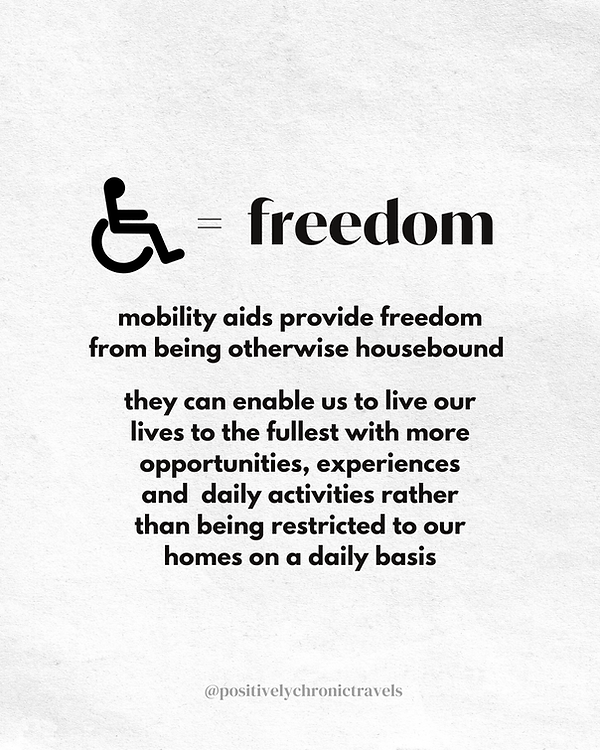
For many people who have varying mobility depending on symptoms, one of the first go-to strategies is rest. But long term, this can be super restrictive to daily life and really debilitate routine and ability to do tasks/activities. Many people find mobility aids can help to bring back the freedom to be able to do more during a flare up. I have this foldable walking stick for travelling. Using the mobility aids available on public transport for example the airport mobility service can really help when travelling. Each person will have different mobility aids that are suitable for them, and potentially different aids for different kinds of flares too.
Supports, orthotics & kinaesthetic tape
These are particularly for conditions like Ehlers Danlos Syndrome with hypermobile joints that may sublux or dislocate frequently. Joint specific supports can help to keep the joints in place when they are being excessively hypermobile / following a recent dislocation or subluxation. Kinaesthethic tape is another method of doing this.
Orthotics can be great for aligning the spine, knees and helping with flat feet, useful in EDS but also are a good general tool to help alleviate further back pain / gait issues. I have a custom made orthotic insole for shoes, but also was recommended birkenstocks as a viable sandal by my podiatrist.

Diet and Nutrition

Now everyone is super different, and so what works for me regarding diet and nutrition will vary from person to person. I am definitely not suggesting that a change in diet will cure chronic illness. However, from my experience, certain diet changes can alleviate symptoms, and vice versa, many foods can trigger symptoms.
The Gentle Gut Health eBook offers over 30+ carefully crafted recipes for individuals with sensitive digestive systems, including those managing conditions like gastroparesis, IBS, MCAS, histamine intolerance, and food sensitivities.
🏷️ Under each recipe you’ll find dietary labels, an energy intensity score 📊, and visuals of the utensils required 👩🍳 —so you can assess both the washing up and whether the recipe suits your energy levels at the time ⚡️
Whether you're looking to try these recipes for yourself or want to make accessible dishes for a loved one, this eBook is packed with options that I hope will be enjoyed by all! 🍽️
You can find my eBook called "Gentle Gut Health: Nourishing Food for Sensitive Tummies" here:
Symptom-Specific Flare Up Strategies
I've created some graphics that can be created if you'd like more visual representations to refer to when in pain and save them to an album in your camera roll/phone gallery. These are just some prompts and examples. Use the last image as a template to download, add text and create your own.


What is similar to what you would add? What's different? Creating your own can really help to remind you of the solutions to alleviate pain and symptoms during a flare up (which can definitely be easier said than done when it's happening!)
I hope it helps to provide some solutions during your next flare. Let me know how you get on and reach out, I'd love to hear from you!
The Step Ladder Strategy
Discover more about the Step Ladder Strategy for managing your chronic illness alongside the flare up toolkit. When we are in pain, we may struggle to remember the relief strategies we can use for each symptom or condition. It can help to use a flare up toolkit, which you can find out more about on this page, or on my symptom specific strategies page but this is another useful strategy to have in your toolbox!
You can create your own and it can be personalised and tailored to your own symptoms and experiences. Everyone's strategies will be personal to them but the concept is a visual cue to refer to when you need a prompt. The range of things you can apply the strategy to is super vast! The rules for going up and down the steps will change depending on the situation. For example, you may say that _ days symptom free or _ days with symptoms, and you go up to the next step.

How it works?
You will typically always have the baseline or first option on the bottom step and go up the steps when needed. My examples have four steps but you can as many or as few as you need.
However it can vary in context:


These are some examples where you start on the bottom step as the baseline/safest option when symptoms are at their worst, then work your way up when symptoms ease.

These are some examples where you start with the more basic strategies for symptoms that are less severe and as you go up it's when symptoms have worsened.


Create your own using these templates below
How to fill them in?
Download or screenshot the image. Print them out and fill them in by hand or use an app like Instagram Stories to fill in and save to your device. You may want to store them in a digital album on your phone labelled "Flare Up Resources" to refer to when you need.


Employment
MY EXPERIENCE BEING DIAGNOSED WHILST IN THE WORKPLACE
I was diagnosed whilst in the workplace at a film production company as a project manager, I'd been working there for nearly two years and so it came as a bit of a shock to my employers when I could hardly walk (because my hips and coccyx was subluxating so much) and had to tell them I needed to work from home whilst waiting for doctors appointments for a diagnosis.
My role was extremely stressful and I’m sure this contributed to the deterioration of my health and my symptom flare up. During the interim period, they devised a restructure in the roles so that I was doing all the administrative project management behind the scenes, and another employee who had more recently joined took over as project manager.
I got my diagnosis after a few months, which was helpful in allowing the employers to understand that it's a chronic condition and that reasonable adjustments have to be made long term. My rheumatologist said that one day in the office a week was enough for me and so that became the arrangement once I was strong enough to commute in on that one day. After four months of working from home in the slightly adjusted role, they said that they wanted that role to be someone who's in the office and not working remotely, so they changed my role to editor and set me up at home with the appropriate equipment, so that I could do the role without needing to communicate too often with the office. Initially it was difficult for them to even believe me and I realise it must have been hard for them to get their heads around, especially as it had never been done before and invisible conditions are harder to understand. Over time I was fortunate that they made sufficient reasonable adjustments to my role so that I could continue working there.
I wanted to share some of my tips and things I wish I knew before
CHECK ABOUT REASONABLE ADJUSTMENTS
If chronic illness is affecting your work, it can help to look into the adjustments available where you live. In Great Britain, employers have a legal duty to make reasonable adjustments for disabled people in the circumstances covered by the Equality Act 2010.
What reasonable adjustments should an employer make?
Reasonable adjustments are individual. They might involve changes to your tasks, working arrangements, breaks or equipment. Acas explains reasonable adjustments and how to ask for them.
-
Flexible working arrangements, such as different hours or home working, where these help with your needs. A statutory flexible-working request and a request for disability-related reasonable adjustments are different routes. In Great Britain, employees can request flexible working from their first day in a job. Northern Ireland has different rules.
-
Conditions; sharing tasks, reducing mental or physical task demand, more frequent breaks, slower work pace,
-
It can help to agree how any changes will work across the team. You can also discuss with your employer what you are comfortable sharing with colleagues.
EXPLAIN TO YOUR EMPLOYER ABOUT YOUR CHRONIC ILLNESS AND HOW SYMPTOMS AFFECT YOU
This will help in defining the reasonable adjustments; sharing tasks, reducing task demand, flexible hours, more frequent breaks, slower work pace.
To communicate this;
-
A letter from your clinician or input from occupational health may help explain how your symptoms affect work.
-
You may want to put together a little one pager about your symptoms, how they may affect your role and what solutions or reasonable adjustments can be made for each one - template below for you to fill out
TO HELP WITH ANXIETIES AROUND COMMUNICATING TO YOUR EMPLOYER AND COLLEAGUES ABOUT YOUR DIAGNOSIS
Being diagnosed and then talking to your colleagues and employers about it all can be quite overwhelming and I know it made me quite anxious as I wanted to explain myself to everyone and the reasons for not being able to do things suddenly - I found cCBT helpful for changing my mindset around this and getting used to the diagnosis.
WORKING FROM HOME WITH CHRONIC ILLNESS
Issues with in office working:
-
the commute (~2 hours of the day can take up a lot of 'spoons' aka energy) - especially if it’s in a city where it’s hard to get a seat
-
needing to rest/nap during the day due to extreme fatigue
-
mobility issues moving around the office if mobility is an issue and you don't use a mobility aid as they clare symptoms (such as vesibular migraine, dizziness etc)
-
lack of self-care (in my experience I’d be so exhausted after a full day in the office that I couldn’t cook dinner, look after myself properly let alone daily chores around my house)
-
missing out on daily management essentials like finding the time for managing overall symptoms and pain levels, physiotherapy and eating well
Working from home made a big difference for me. It took time to explain what I needed and agree arrangements that worked.
My employers weren't a fan of the remote working at first and it wasn't the easiest process getting them to understand why, so I hope these suggestions can make it easier for you
What has your experience been with chronic illness and diagnosis in the workplace? Or have you got symptoms and suspected diagnosis but awaiting appointments? I'd love to hear from you, please get in touch
